“Salt and Light”
Isaiah 58:1-12
Matthew 5:13-16
Our faith is not based on doctrine, creeds, or apologetics. Our primary purpose is not simply to believe certain things or to convince each other to believe all the same things.
But when I think about the foundations of our faith, one of the things that’s most convincing to me, one of the aspects that is most appealing to me, is the high proportion of things that, as we used to say in the newsroom, you just couldn’t make up.
And we see some of those in our scriptures today.
A deity who does not care most about religious ritual and praise? Are you kidding me?
Our president expresses more need for praise and ego gratification in a single day than the Holy One does in all of history.
A Creator who cares most about how their creations, especially the human ones—the ones made in the divine image—treat one another and all the rest of creation? Seriously?!?
The only thing our president is more dedicated to than self-glorification and making money is spewing hatred and spreading lies and memes designed to stoke racial, nationalistic, misogynistic, sexual, and economic division.
A God who loves their people so much and grieves so deeply over how they treat one another, that they will take on the significant risk of becoming one of them and living among them to try to set things right? Really?!?
Meanwhile, our president and his subordinates cannot be bothered to—very low bar, here—express condolences to family members of people who have been murdered in acts of political hatred or government lawlessness and cruelty.
As I said, you couldn’t make up this kind of God. No one would believe you.
And maybe that’s why it’s always been easier to impose or follow religious rules, to attend a National Prayer Breakfast, to transform the dark-skinned intolerant Jewish rabbi known as Jesus of Nazareth into a gun-toting white American man, to make church attendance mandatory for entry into heaven (as if that was the point), to declare certain kinds of people unclean and exclude some kinds of people from the fold. Maybe it’s always been easier for us to follow a checklist of to-dos than to get over ourselves and actually love and care for our neighbors.
Forgive me if I sound cynical. The truth is that seeing all the ways that good, ordinary people are protecting, supporting, and loving their neighbors bolsters my faith. It’s seeing the light of Christ in both the persecuted folks and their privileged allies that gives me hope.
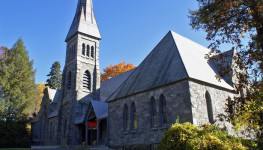
It’s seeing our sanctuary filled to capacity with more than 400 people wanting to learn how to protect our immigrant neighbors from federal immigration agents. It’s knowing that Wednesday night’s event raised more than $11,000 for immigrant solidarity work in our area. It’s knowing that at least 60 more people tried but couldn’t get into that event, and that the next bystander training—almost a month away—is already near capacity.
Forgive me if I sound sad and angry, but please know that I am neither hateful nor hopeless. I am a firm believer in the importance of lament and public grieving. I think of Jesus looking out over the city of Jerusalem and weeping over the people’s apparent unwillingness to stop living in fear—including the fear of change and fear of the other—and to, instead, follow the risky but life-giving way of love.
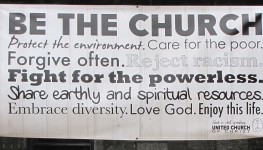
I am a firm believer in the healing power of love, the transformative power of community, and the world-changing power of doing justice, loving kindness, walking humbly, making peace, and loving our neighbors while understanding that everyone—everyone—is our neighbor. More than that, I am a proponent of deep spiritual joy over empty religious obligation, and I trust it is joyful justice-making that will heal us and set things right.
I believe everything and everyone is connected, that we are all kin, and that loving solidarity and generous living are the practices most likely to get us out of the horrible mess we are in.
And if you think I’m making too much of a single passage from Isaiah, consider all the other Hebrew prophets, the Ten Commandments, all of Jewish law, the Beatitudes, all of the gospels, and the ministry of Jesus.
Or just ponder this divine message relayed through the prophet Amos:
Away with your noisy hymns of praise. I will not listen to the music of your harps. Instead I want to see a flood of justice, an endless river of righteous living.
A flood of justice. An ever-flowing stream of sharing and caring.
But how do we get there?
How do we get from our government tearing innocent children and process-following immigrants away from their homes and families and jobs and schools to God’s dream, where everyone sits securely and joyfully under their own fig tree, in their own yard?
How do we go from almost completely forgetting about the utter destruction and genocide in Gaza to becoming the kind of people who can restore, rebuild, renew and make communities livable again?
How do we go from being a nation where powerful people do horrible, racist, unjust things to others in the name of Jesus to being a justice-seeking, peace-making community of gentle, loving people who understand that Christ is to be found in the marginalized and rejected, the powerless and the persecuted?
How do we go from lumping everyone who voted for the president into the same category of deplorables to actually listening to, and even loving, our enemies? How do we go from seeking power over others to building solidarity with as many people as we can?
We tend to think that the kind of political, social, and economic change—justice and peace—we seek will come primarily from political and community organizing, from getting out the vote and voting. We tend to thing that the state of the world is determined primarily by which individuals are in office, which party is in control, and whether the Constitution is being upheld.
In fact, given the current administration’s total disregard for constitutional rights, the separation of powers, and the democratic process, those things seem to be true. And God knows that organizing, building community, and getting out the vote are extremely important to creating the kind of change we want to see; they are absolutely necessary.
And . . . there is much more to it than that.
As we’ve seen time and again, until people change, until values evolve, until love of our neighbor grows to be stronger than fear of the other, the divisions among us will persist, the unjust treatment of the different and the disadvantaged will continue, and the occasional electoral victory will be result in little more than another spin of the revolving door of policies and personalities.
This is so much of what the Sermon on the Mount is about. It us understanding that we are already blessed and that a God more loving and gracious than we can imagine is just waiting for us to live into the way things are meant to be, the way we are meant to be.
If we want to be agents of lasting change, if we want our justice-and-peace-and-solidarity work to make a difference for the long haul, Jesus suggests that we need to be true to who we are and to what we were made for.
Notice that he does not say, “Work hard, be good, and maybe one day you’ll become the salt of the earth.”
What he says is: “You are the salt of the earth”—so be salty, go into situations that have grown dire and desperate in their blandness and disconnection, and spice things up. Go to people whose hard lives have worn them down unto death, and bring some life into their circumstances. Confront systems that have become instruments of injustice and cruelty, and restore them to their rightful purpose.
In the same way, Jesus does not say, “Walk this spiritual path so that you might, someday, become a light for others.”
What he says is, “You are the light of the world”—so let your light shine! Put yourself in dark places, walking with people who have lost all hope, people who can no longer see the way forward. Shine a light so that all who are lost will be able to find their way—the way to one another, the way to love and community and hope.
It has been said that the mission of the church is such that, when fully lived out, the church becomes the only organization on earth that exists for people who are not part of it.
Beloveds, the world we live in has lost its taste for what is true and good and right. We need to spice things up.
The times we live in have so grown dark and cold that many people have all but forgotten what respect for others looks like, how integrity behaves, and what love does. We need to shine a light.
If we truly are the light of the world, we must bear the light of Christ in dark places. If we are the salt of the earth, as Jesus said we are, we must bless the world with God’s extravagant love.
We were made for this, beloveds. So let us be instruments of healing and restoration. Let us be light and love.