“Part of the Great Whole”
Wisdom of Solomon 1:12-15
Hebrews 12:1-2
Luke 20:27-28
The Sadducees of Jesus’ day treated death as the end of the road. They didn’t believe in a spiritual life after a physical death. They were less interested in the considerable needs of widows or the priceless gift of children than they were in tripping Jesus up and making a mockery of the whole concept of resurrection.
And so, presuming that life with God would be exactly like life on earth, they concocted a preposterous hypothetical in which a woman’s husband dies and is then, in turn, married by her husband’s six brothers, each one of them also dying before she bears them any children. Then the woman dies.
If there really is life beyond death, they ask Jesus with a wink and a nod, which of the seven brothers will be the woman’s husband in the resurrection?
Jesus refuses, of course, to take the bait. You can imagine him shaking his head and thinking, “Wow. They really don’t get it. They don’t get it at all. They seem to think that life after death would be simply more of the same instead of eternal glory with God.”
And then, to prove his point, Jesus does something that most of us don’t do nearly enough: He invokes the ancestors. He names Moses and Abraham, Isaac and Jacob. He names the ancestors not to worship them but to acknowledge what for him is a fundamental reality:
The living are connected to the dead, and the so-called dead are yet alive and still connected to the living.
“God is not concerned with the dead, but with the living,” he says, and then, to clarify his point, adds that those who have died are, to God, not dead at all. All who have died are alive again.
The apocryphal Book of Wisdom says that, furthermore, God has nothing to do with death. God did not make it and God dies not desire it. To the contrary, God made everything that it might live. Beyond that, God made every living thing that it might generate still more life. And righteousness—also translated as justice—lives forever.
There’s at least one good sermon in all that: That God takes no delight in the suffering or ruin of anything that lives. That whatever or whomever we understand or imagine God to be, God is all about life and living and all things life-giving. That death is anathema to God, who is Love, and that the biggest, hardest, most life-changing faith statement anyone can make—regardless of their feelings or beliefs about God—is that Love has the last word. That in the end and even now, by our witness and memory and legacy, love overcomes death.
That’s an important sermon, but it is not today’s sermon.
Today’s sermon has more to do with that great cloud of witnesses we read about in the Letter to the Hebrews, that cloud of faith, perseverance, love, joy, and encouragement that surrounds us—whether we’re aware of it or not, whether we feel it or not, whether we believe in it or not.
The Letter to the Hebrews says, “You are the result, not only of God’s love and grace, but also of the faithfulness and courage of all those who have gone before you.”
Chickasaw poet and author Linda Hogan, reflecting a key element of indigenous spirituality, says, “You are the result of the love of thousands.”
Celtic spirituality says, “You are surrounded by spirits of joy, life, and wisdom, and they are closer than you realize.”
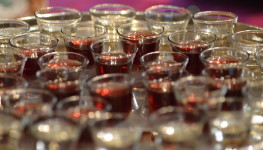
Our Mexican neighbors tell us that celebrating the dead with food and drink and special offerings will draw them near to us once again.
Contemplative mystic Richard Rohr says those who came before are still very much a part of us—that we are connected.
“Our ancestors are still in us and work with us and through us,” he says. “We are part of the Great Whole,” or, as our scriptures say, “the communion of saints.”
Whether we like it or not. Whether we believe it or not. Whether we take advantage of it or not.
And . . . talking about our connections to our ancestors and other dear ones who have passed on is tricky territory. The scriptural stuff can feel too much like doctrine and too hard to believe. The other-cultural stuff can feel too woo-woo. Ancestor worship doesn’t seem right. And, if we’re honest, some of us aren’t that crazy about being connected to our ancestors. Some of them believed and did things that were not of God’s love; some of them passed on dysfunction and pain that we want no part of.
But I’m guessing that you don’t need the Bible to tell you you’re still connected to your loved ones who have left this earth. You think of them often, you sometimes hear them whispering in your ear, you sometimes find yourself talking to them, you occasionally feel their presence with you.
All Saints Day, All Souls Day, the Day of the Dead and other religious and cultural observances invite us not only to celebrate the faith of the saints and the lives of our dear ones, but also to let their lives continue to bless ours, to nurture the connections we continue to have with those who’ve gone to glory, and to draw upon and give thanks for the heavenly cheering section that is always with us.
I encourage you today to choose just one ancestor or other dear one whose embodied life you miss. Imagine that their spirit is yet alive and that their love is still with you. Let yourself feel connected to them. Let yourself be encouraged by them—now, while the veil between worlds is thin.
Whenever you’re not sure what to do, and especially when you’re not sure you can keep going, I encourage you not only to pray but also to invoke some ancestor, any ancestor—it doesn’t have to be someone from your family tree—and draw upon their faith and courage. Draw upon their love of God and their love for you.
If you’re not sure how to do that, read the eleventh chapter of the Letter to the Hebrews. It is an inspiring roll call of some of the ancestors of the early Jewish Christians.
I’ll leave you with a reflection some of you have heard before. May it open you to a deeper awareness of the great cloud of love that surrounds you:
I’ve accompanied enough people through the dying process to believe there is something—and, more important, someone—on the other side of the veil. I’ve heard enough deathbed visions to think that while death takes our beloveds from us, it may reunite them with dear ones who’ve gone on before.
My people are buried in a simple, cooperatively-owned cemetery in the piney woods of East Texas. Stately live oaks tower over the graves, Spanish moss hanging from their branches like so many ladders connecting earth to heaven. Once a year the cemetery hosts a homecoming, and the living gather ’round their dead for an afternoon of visiting and pecan pie.
When the time came to lay my grandmother Edra to rest in the red clay soil of that place, the local preacher—her nephew and my dad’s double-first cousin—did the honors. Looking around, he reminded us that she was in good company.
The remains of her husband, Morris, rested on one side of her; her second-born child, Aubrey, whose death at 18 months old broke her heart, was on the other. Over there lay her identical twin, Neva. Over yonder were her sisters Iva, Roda, and Opal, her brothers Travis and Verdon, and her grandson (and my brother) Keith.
I don’t know where we go when we die, but I’d like to think there might be a welcoming party to greet us. I like to think it will feel like home.
Lord of the living and the dead—who are yet alive to you—when the roll is called up yonder, may we find ourselves at home and at peace in your heart, alive among the communion of saints, enthusiastic members of that great cloud of witnesses, living parts of the Great and Eternal Whole.